What Happens to Intoxicating Hemp Products After December 11, 2026?
December 11, 2026, is a major federal turning point for intoxicating hemp products. A change to the federal hemp definition is scheduled to take effect on that date, narrowing which products can be treated as hemp under federal law. Products that no longer fit the definition may lose the legal pathway they have relied on, even if they were made from hemp and sold legally before the change.
The practical change centers on a strict limit: 0.4 mg total THC per container, not per serving. The revised definition also addresses THCA and certain other intoxicating cannabinoids. That means labels, formulas, packaging, and lab reports will all matter—and a delta-9-only result may not tell the whole story.
One-sentence takeaway: After December 11, 2026, many intoxicating hemp products may no longer qualify as hemp under federal law if they exceed the new total-THC-per-container limit or otherwise fall outside the revised definition.
What changes in the federal hemp definition?
The 2018 Farm Bill defined hemp largely by reference to delta-9 THC concentration: cannabis and its derivatives could qualify as hemp if they contained no more than 0.3% delta-9 THC on a dry-weight basis. That framework helped create a market for hemp-derived products, including gummies and beverages designed to produce intoxicating effects.
The 2026 change revises the federal definition. Among other restrictions, the updated definition uses a limit of 0.4 milligrams of total THC per container for covered hemp-derived cannabinoid products. It also brings attention to cannabinoids beyond delta-9 THC, including THCA, and to certain cannabinoids produced or modified through manufacturing processes.
This does not mean every product made from hemp automatically becomes illegal on December 11. It means some products may no longer qualify as “hemp” under the federal definition. Other federal and state rules may then apply, and the product may not be lawfully marketed through the same channels. The exact outcome can depend on the product, its ingredients, its claims, and where it is sold.
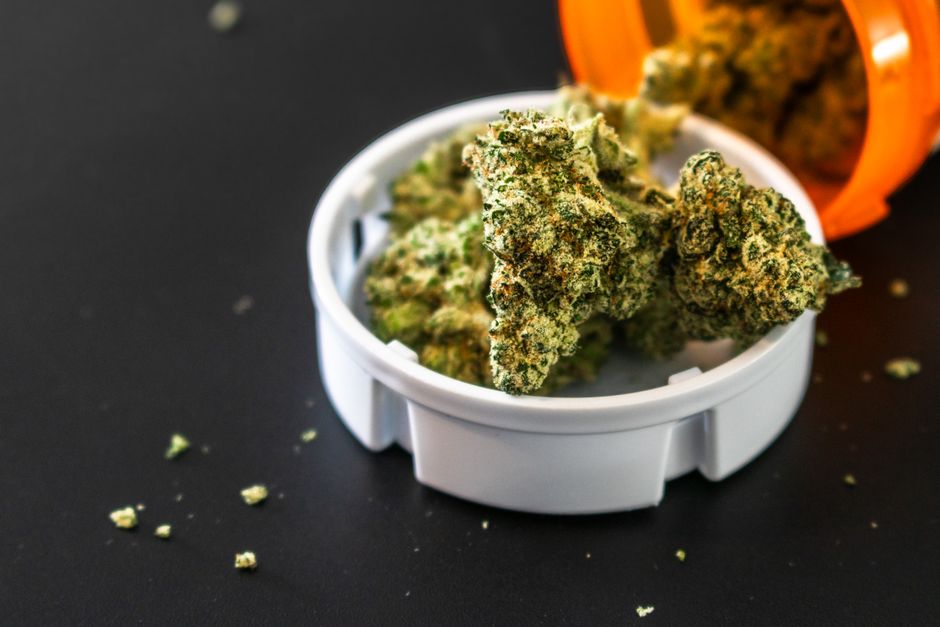
Why the 0.4 mg limit is per container—not per serving
One of the easiest label details to misunderstand is the difference between a serving and a container. The new threshold is described as a 0.4 mg THC per container cap. It is not a 0.4 mg allowance for each gummy, each serving, or each piece in a multi-serving package.
Label detail What it tells you Why it matters THC per serving The amount in the stated serving size Useful for understanding an individual portion, but not the full container total Number of servings How many servings the package contains Multiply serving-level amounts by servings to estimate the package total Total THC per container The amount across the full package The key comparison for a container-based thresholdFor example, a package with ten servings containing 0.1 mg of total THC per serving would contain 1 mg across the package. A small amount per serving does not necessarily keep the full product below a container limit.
Always check how “container” is defined in the applicable rules and how the product is packaged. A multi-pack, a resealable pouch, or a bundle may raise usaenlinea.com questions that a front-label serving statement cannot answer by itself.
Delta-9 THC is not the whole THC story
Many shoppers are familiar with delta-9 THC because it is the cannabinoid most often listed in product descriptions and lab results. But a product’s delta-9 result alone may not show its total potential THC content.
THCA, or tetrahydrocannabinolic acid, is a precursor that can convert into delta-9 THC when heated. This process is called decarboxylation. A product can therefore show little delta-9 THC in its unheated state while containing THCA that may produce THC after conversion.
How labs may calculate total THC
A commonly used calculation estimates total THC by combining measured delta-9 THC with the amount of THCA adjusted for the mass lost during conversion:
Total THC ≈ delta-9 THC + (0.877 × THCA)
The factor reflects that THCA loses part of its molecular mass when it converts to delta-9 THC. The precise testing and reporting requirements can depend on the applicable rule and method, so do not assume every certificate uses identical terminology or calculations.
This is why a certificate of analysis (COA) that lists only delta-9 THC can be incomplete for evaluating a product against a total-THC standard. Look for results for both delta-9 THC and THCA, along with a clearly stated total THC value where appropriate.
What happens to products that exceed the limit?
If a product exceeds the new limit or otherwise falls outside the revised federal hemp definition, it may no longer be treated as hemp under federal law. That can affect manufacturing, distribution, retail sales, shipping, and online listings. It does not automatically answer every question about the product’s status: other federal laws and state laws may govern what happens next.
Companies may respond in several ways. Some may reformulate products to reduce total THC, change package sizes, discontinue certain products, or shift toward non-intoxicating products. Others may explore different regulatory pathways, but those pathways are not interchangeable with the hemp framework and may carry their own restrictions.
Retailers and consumers should be wary of claims that a product will simply “grandfather in” because it was sold before the effective date. A prior sale does not, by itself, guarantee that continued production or sale will be allowed under the new definition. I remember a project where thought they could save money but ended up paying more.. Businesses should confirm current federal and state requirements before relying on assumptions about inventory or sell-through.
Will hemp-derived gummies still be legal?
The question “Are hemp-derived gummies legal?” does not have a single nationwide answer. Before the effective date, a product may meet the older federal definition and still be restricted by state law, age limits, local rules, or other federal requirements. After the change, a gummy that exceeds the applicable total-THC-per-container limit may no longer qualify as hemp under federal law.
So, hemp-derived gummies legal is not a yes-or-no label claim that works everywhere. The answer depends on the formula, the amount per container, the testing method, the state, and the date of sale. Products under a federal hemp definition are also not automatically approved by the FDA for every food, supplement, or health-related use.
State rules can be stricter than federal rules, and states may regulate intoxicating cannabinoids differently from one another. A product that is available in one state may be restricted or prohibited in another. Consumers should check local law rather than assuming online availability means a product is lawful where they live.
What the “$28 billion intoxicating hemp market” figure does—and does not—mean
Industry discussions sometimes describe an intoxicating hemp market 28 billion in size, usually as an estimate of economic activity, potential sales, or projected market value. Such figures can help explain why the federal change is attracting attention, but they should not be treated as a guaranteed measurement of products that will remain on shelves.
Market estimates may use different definitions of “intoxicating hemp,” cover different time periods, and include projections rather than audited sales. A large estimate does not determine whether an individual product is compliant or legal. The legal question turns on the statute, the product’s composition, and relevant state rules—not the size of the industry estimate.
How to read a COA before and after the change
A COA is a lab report for a particular product sample or batch. It can help verify cannabinoid content, but it is not a blanket guarantee that a product is safe, compliant, or legal in every state. Check that the report matches the product and batch you have, and review its date and testing scope.

Look for these details
- Delta-9 THC and THCA: A report that lists only delta-9 may miss information needed to understand potential total THC.
- Total THC: Check whether the lab reports a calculated total and how it is defined.
- Units and serving basis: Confirm whether amounts are reported per gram, per serving, or per package. Do not compare unlike units.
- Package count and serving size: Use the actual number of servings to understand the total amount in the container.
- Other cannabinoids: Review what else was tested, especially if the label highlights a specific cannabinoid.
- Contaminant testing: Check whether the lab also tested for relevant contaminants, such as pesticides, heavy metals, or residual solvents.
Third-party lab testing can improve transparency when the lab is independent and the report is tied to the product batch. It does not replace regulatory review, and it does not make a noncompliant formula compliant. If a brand uses “THC-free,” look for the actual result and the lab’s reporting limit; a “non-detect” result means the amount was below that method’s detection threshold, not necessarily absolute zero.
What brands and retailers can do now
For companies, preparation should start before December 2026—not when shipments are already in transit. Brands such as Joy Organics operate in a category where clear product information and reliable quality systems matter to customers. Any company selling hemp-derived products should evaluate each formula and claim against the rules that will apply to its products and markets; a brand name alone does not establish a product’s status.
- Inventory every formula. Identify intoxicating products and record the full cannabinoid profile, not only delta-9 THC.
- Review container-level totals. Confirm how much total THC is in the complete package, including all servings.
- Update testing protocols. Work with qualified laboratories on methods and reporting that address THCA and total THC where required.
- Check labels and marketing. Reassess serving statements, package information, health claims, and phrases such as “THC-free” or “legal in all 50 states.”
- Track state rules separately. Federal and state requirements are not identical, and rules can change on different timelines.
- Plan inventory decisions early. Get legal and compliance advice on production, distribution, returns, and remaining stock rather than assuming a sell-through period exists.
What consumers should expect
Ask yourself this: consumers may see fewer intoxicating hemp products, smaller or reformulated packages, revised labels, or a shift toward products with little or no thc. Some retailers may stop carrying certain items before the effective date, while others may continue offering products that comply with applicable rules. Availability will likely vary by state and product type.
Do not rely on a “hemp-derived” statement as proof that a product will remain federally classified as hemp. Read the full label, verify the COA, and check current local rules. If a product’s serving size, container amount, or cannabinoid profile is unclear, ask the seller or manufacturer for clarification.
The bottom line
December 11, 2026, is expected to change the federal treatment of many intoxicating hemp products by narrowing the hemp definition and applying a 0.4 mg total THC per container limit to covered products. Delta-9 THC is only one part of the picture: THCA can convert to THC, so total-THC calculations and complete lab reports matter.
For consumers, the key is to look beyond the front label and check the COA, package total, and local rules. For businesses, the key is to review formulas and compliance plans well ahead of the effective date. The precise legal result can depend on the product and jurisdiction, so this overview is informational—not legal advice.